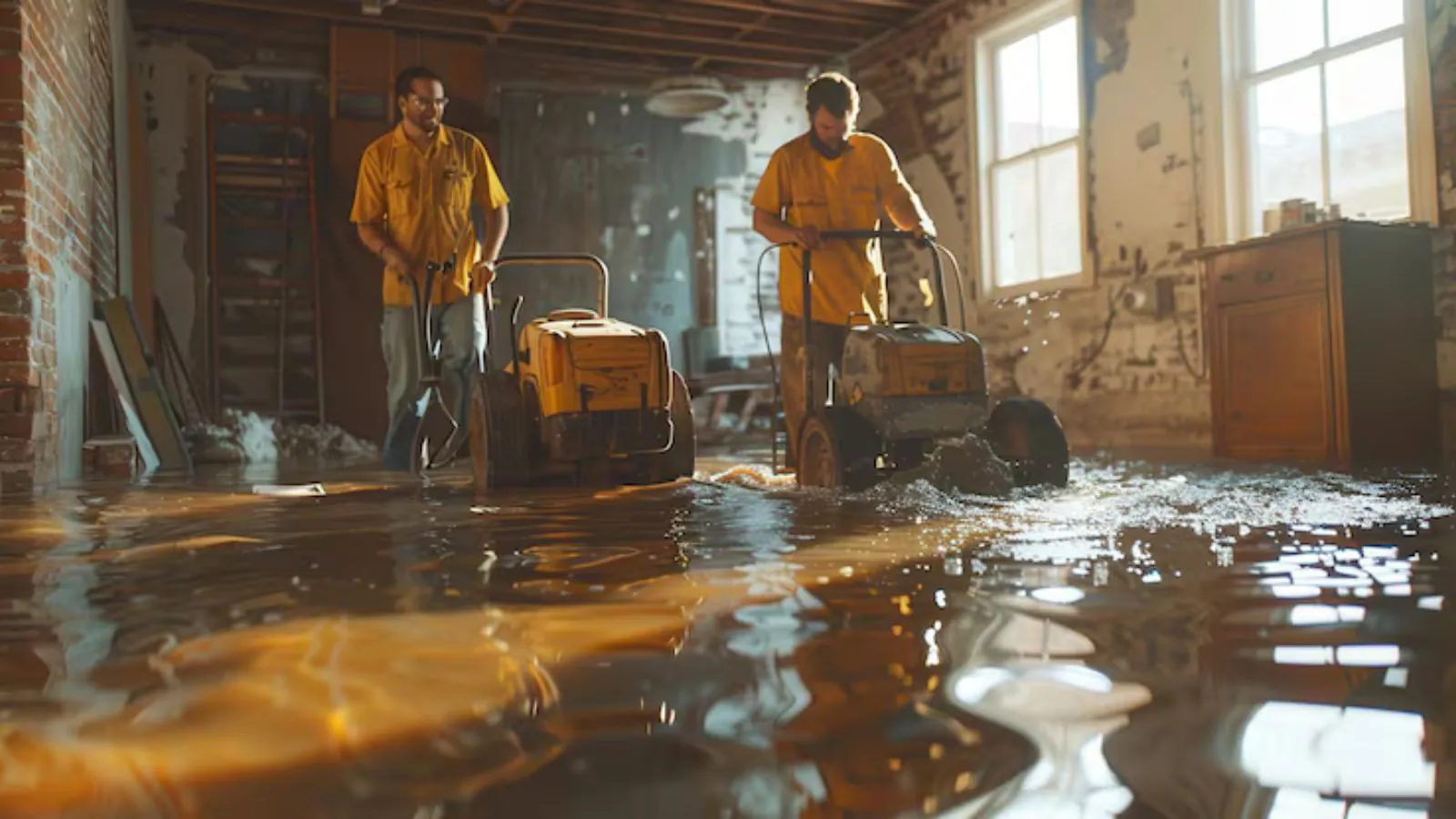
If water is standing in your house right now, call the 24/7 line and then deal with the source. Shut the main water valve, switch off power to wet rooms only if you can reach the panel from dry ground, and keep children and pets out of the water. Extraction is the first job after that, because every hour of standing water lets moisture climb into drywall, subfloors and framing.
Water extraction means removing bulk water from floors, carpet, pad and low spots with submersible pumps, portable extraction units and wet vacuums. It comes before drying, not in place of it. Structural drying finishes what extraction starts, and skipping either step is how a wet room turns into a mold call a few weeks later.
When standing water is an emergency
Some wet floors can wait for a morning appointment. These cannot. The line is open at night, on weekends and on holidays for exactly these situations, listed below.
- Water has reached outlets, power strips, appliances plugged in at floor level or the electrical panel.
- The water is gray or brown, smells like a drain, or came up through a floor drain or toilet. That points to a sewage backup and needs different handling.
- Water is spreading into a second room, a hallway or the room below.
- A ceiling below the wet area is sagging, stained or dripping.
Why water ends up on North Babylon floors
The Town of Babylon hazard mitigation plan describes high groundwater as a recurring problem and notes that basement flooding is common after heavy rain, especially in low-lying areas and where basements have been finished. It also records storm drains backing up in heavy rain. On August 13, 2014, the Islip airport gauge recorded about 13 inches of rain in roughly a day, a New York record, and Long Island roads and basements flooded.
In practice that means a finished basement in a house off Deer Park Avenue or near Deer Lake can take on water without any pipe failing. When that happens, treat the carpet, pad and the bottom of the walls as wet through, not just the visible puddle, and ask the crew to read the walls before anything is closed up.
| Where the water is | How it is removed | What gets checked after |
|---|---|---|
| Hard floors (tile, vinyl, sealed concrete) | Squeegee and wet vacuum, then pump for depth | Seams, baseboards and the subfloor edge |
| Carpet and pad | Weighted extraction wand pulls water through the carpet, pad is usually lifted or discarded | Tack strip, subfloor and the wall base above |
| Basement low points | Submersible pump into a discharge hose, then wet vacuum for the film left behind | Sump pit, slab cracks and framing at the floor line |
| Wall cavities after a leak | Small access holes or cut-outs so air and extraction reach the cavity | Insulation, bottom plates and electrical boxes |
Water still moving through the house?
Call now and dispatch will talk you through shutoff steps while a crew is arranged.
What a visit covers, in order
- Safety check: electrical, structural sag, contaminated water.
- Find and stop the source, or confirm it has been stopped.
- Photograph the water line, wet materials and affected contents before anything is moved.
- Pump and extract standing water, then work through carpet, pad and low spots.
- Remove materials that cannot be dried in place, such as saturated pad or soaked insulation.
- Take moisture readings and hand off to drying equipment, with the plan written down.
What moves the price of extraction
Scope and price are explained before work starts. The honest answer on price depends on these five things, and a crew has to see the water to weigh them.
Insurance treats sources differently. New York's Department of Financial Services says a typical homeowners policy does not cover flood damage, while sudden water from a failed pipe or appliance is often covered and sewer or drain backup usually needs an added endorsement. Photograph everything before cleanup, keep receipts for emergency work, and ask your insurer before permanent repairs.
Related jobs after the water is out
Once the standing water is gone, the work usually moves to drying and moisture mapping. If the source was a split supply line, see burst pipe water damage. If rain or groundwater caused it, basement water damage covers the finished-space issues, and neighbors in Deer Park call the same line.
Common questions
Yes. The line is staffed 24 hours a day, every day, and dispatch asks where the water is, what is plugged in nearby and whether you can reach the shutoff. Same-day response is offered when a crew is available, and no arrival time is promised over the phone.
Pulling bulk water from a room is usually a matter of hours. Drying the materials afterward takes days, and the crew reads moisture levels to decide when it is done.
For a small, clean spill on a hard floor, yes, as long as nothing electrical sits in the water. For anything deeper, or any gray or brown water, leave it for protective gear and proper pumps.
Hold off unless the crew asks. Photograph the wet carpet first, because your insurer may want to see it, and lifting it wrong can tear the pad or the tack strip.
This service does not rent equipment. Crews bring and monitor their own drying equipment, which is the safer route because moisture readings decide when to stop, not a guess.
Yes. Finished walls, carpet and insulation hold water out of sight, so a basement with a clean-looking floor can still be wet behind the baseboards.