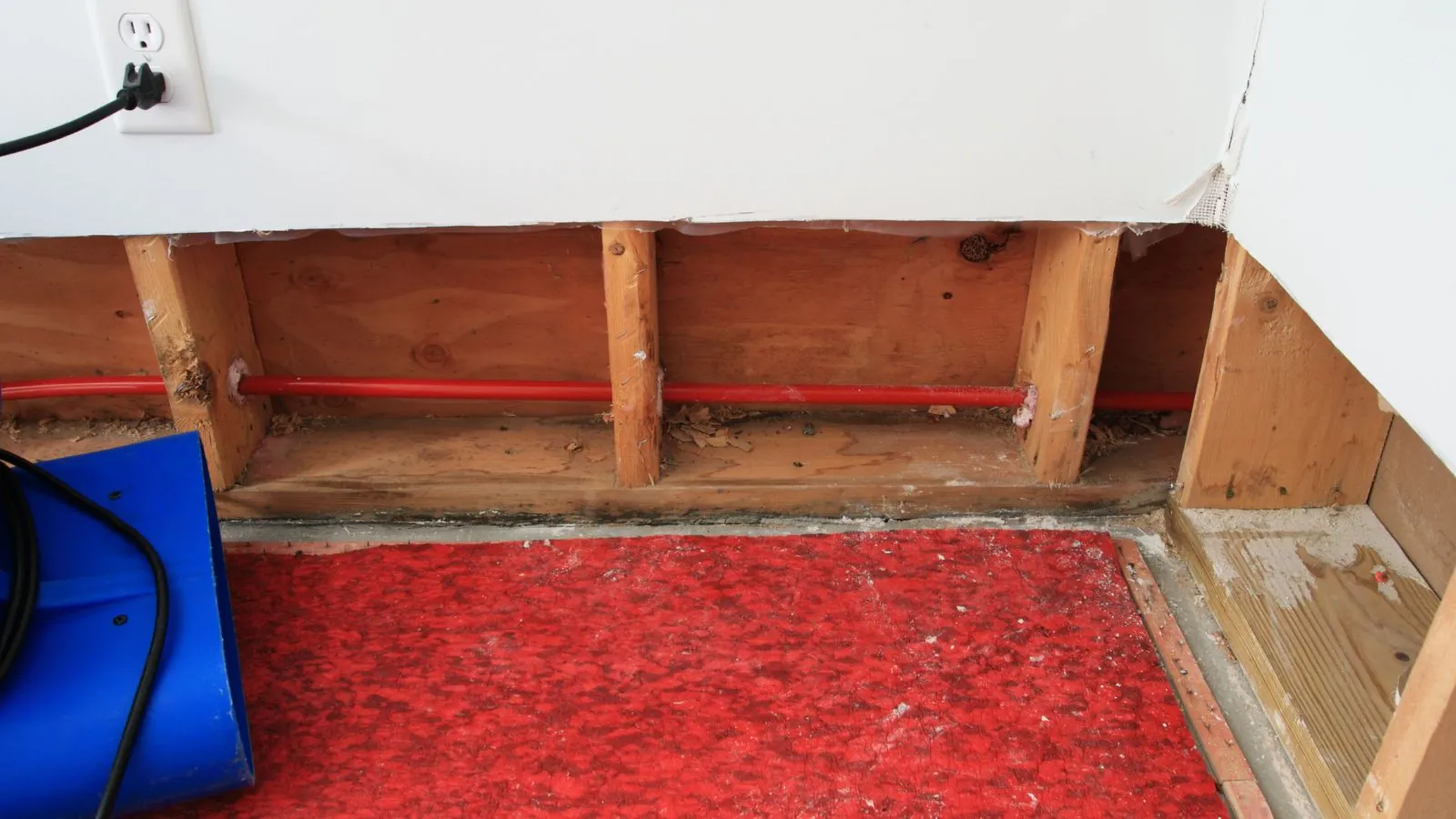
Structural drying is the stage that follows extraction. Once standing water is gone, moisture remains in drywall, insulation, subfloors, framing and flooring, and it needs to be pulled out in a controlled way. The tools are air movers, dehumidifiers, sometimes injection or panel systems for wall cavities and moisture meters to track the result.
If you can see damage, there is usually more behind it. A wet wall can look dry on the surface while the bottom plate and insulation behind it hold water.
Symptoms that mean a structure is still wet
Musty smell that returns
Moisture is still present in a cavity or under flooring.
Cupped or buckled flooring
The subfloor or planks absorbed water and have not equalized.
Paint bubbling or peeling
Water moved through the wall surface from inside.
Condensation on windows after a leak
The house has more humidity than normal, often from wet materials drying out.
How drying is planned
The crew maps moisture first, using a moisture meter on surfaces and a thermal camera to see temperature differences. The map shows which materials are wet and how far the water traveled. Equipment is then placed based on the map, not on a standard formula.
Readings are taken at each visit, usually daily, and equipment is moved or removed as materials reach their dry standard. The goal is a written record that shows when the structure is dry.
| Equipment | What it does | Typical use |
|---|---|---|
| Air movers | Move air across wet surfaces | Floors, carpet and wall bases |
| Dehumidifiers | Remove moisture from the air | Whole rooms and closed spaces |
| Wall cavity systems | Push or pull air through wall cavities | Walls with insulation or closed-in framing |
| Moisture meters and thermal cameras | Measure and map moisture | Initial scoping and daily checks |
Not sure if the walls are dry?
Call and ask about moisture readings before anything is closed up.
Why daily readings matter
A room that feels dry may still have wet framing, and a closed wall can hold moisture for weeks. Daily readings show when equipment is working and when it is done. The industry standard, ANSI/IICRC S500, covers drying goals and documentation, and you can ask any company whether its crews work to it.
This service does not rent drying equipment to homeowners. Crews bring and monitor their own, because without readings there is no way to know when drying is complete.
Related jobs that lead here
Drying follows most water losses, including burst pipes, flooding and appliance leaks. If mold is already present, see mold remediation, which has separate licensing and steps.
For basements, basement water damage cleanup covers the issues with finished walls and slabs. Those spaces dry more slowly because the concrete itself holds water.
What affects the cost
Scope and price are explained before work starts.
Insurers often want drying logs and photos as part of the claim. Ask the crew for the moisture readings and equipment log, and keep them with your other claim records.
Common questions
Seasons and indoor humidity
Drying works differently in humid summers than in dry winters. In summer, outdoor air is wet, so closed-room dehumidification carries the load. In winter, heating helps but exterior walls can stay cold, which slows drying in some cavities.
A crew adjusts equipment to the season. That is another reason the readings matter more than a fixed number of days.
What you can do during drying
- Keep doors and windows closed in the drying area unless the crew says otherwise.
- Do not turn off equipment, even if it is loud.
- Keep the thermostat at a normal setting so the house is not cold.
- Tell the crew if you notice new stains, smells or sounds.
Drying is a process with a start, a middle and a measurable end. The crew should be able to tell you what the target readings are and when they are reached.
Ask for the final moisture log. It documents that the work is complete.
- Turn off power to wet areas only if you can reach the panel from dry ground.
- Do not touch wet electrical equipment, and call 911 or the utility for any electrical or gas risk.
- Keep children and pets out of the area, and photograph the damage before you clean.
The drying phase, permits and paperwork are explained for homes near Phelps Lane on the Phelps Lane area page.
Typically a few days, but it depends on the materials and conditions. Readings, not a calendar, decide when it is done.
A fan alone moves air but does not remove moisture. Dehumidifiers and monitoring are needed to finish the job.
Drying reduces the moisture mold needs. Mold concerns come from materials that stayed wet too long.
Yes, equipment runs continuously. A crew can explain the setup and the expected duration.
No. This service does not rent equipment, and crews monitor their own drying.
Yes. See Brightwaters and Deer Park.