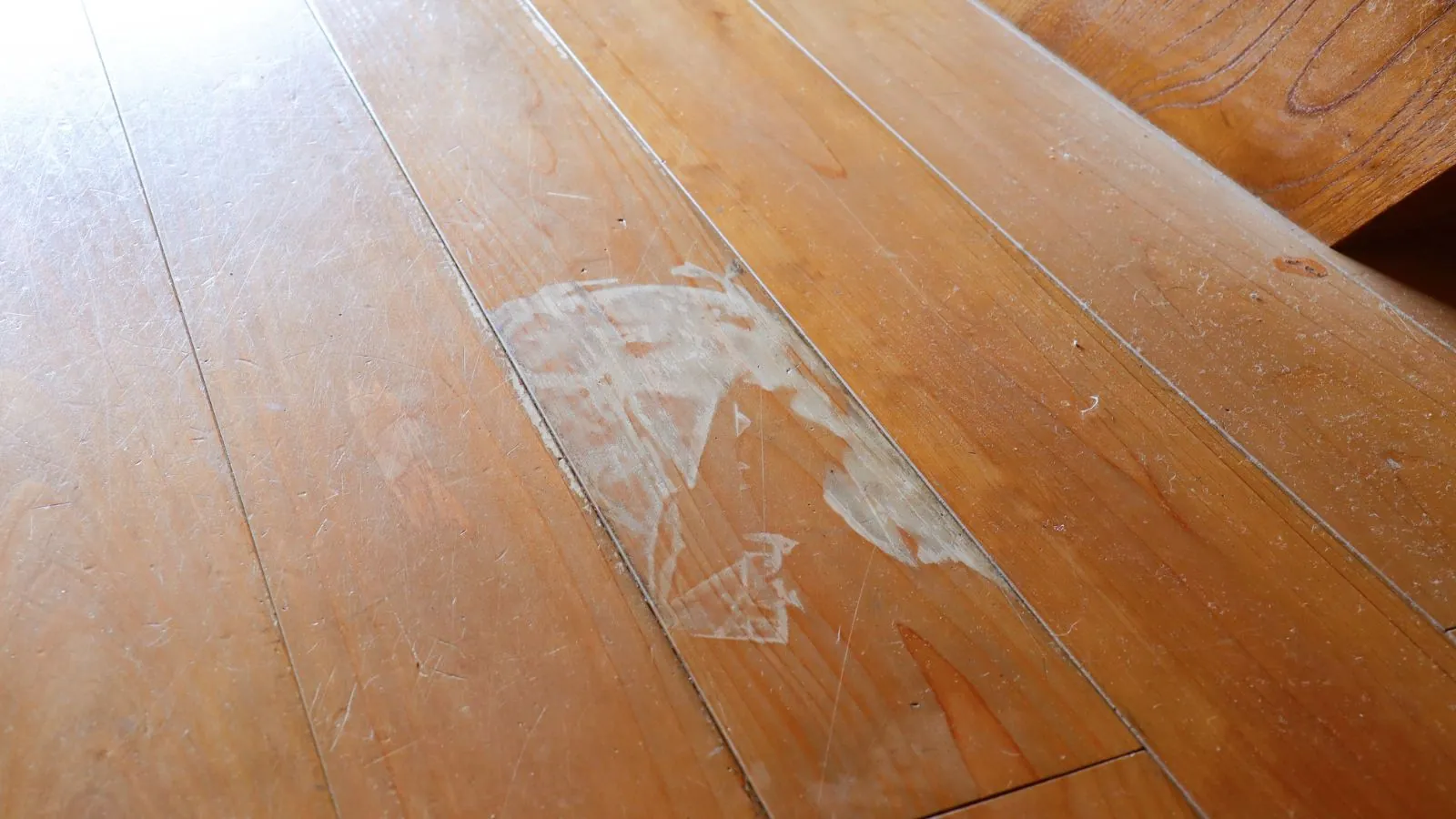
Hardwood is a natural material that swells as it absorbs water. A floor that was wet briefly may return to flat once it dries, while a floor that stayed wet for days may cup, crown or buckle off the subfloor. The sooner the water is removed and drying starts, the better the odds.
If your floor is wet, stop the source, lift rugs and furniture and call. Do not seal a wet floor with a coating or cover it with plastic, which traps moisture.
What water does to hardwood
Cupping
The edges of planks rise higher than the center, because the underside absorbed more water.
Crowning
The center rises after a cupped floor is sanded before it is fully dry.
Buckling
Boards lift off the subfloor, a more severe result of moisture.
Gaps and staining
Boards shrink as they dry, leaving gaps, and water can leave dark marks.
Drying methods for floors
Crews use air movers, dehumidifiers and sometimes specialized mat or panel systems that pull moisture up through the boards. A moisture meter checks the wood and the subfloor, and readings are taken each visit. Drying is slow because wood gives up water gradually.
Pulling a few boards can speed drying by opening the cavity beneath. That is a judgment call made with readings and with the homeowner, since removed boards need to be replaced.
| Condition | Likely next step | Notes |
|---|---|---|
| Slight cupping, floor still damp | Continue drying with monitoring | May flatten as moisture drops |
| Cupped but fully dry | Sand and refinish if boards are flat enough | Never sand a damp floor |
| Buckled boards | Remove and replace affected section | Subfloor may also need drying |
| Engineered or laminate | Often replaced | Layers can delaminate when wet |
Floors cupping after a leak?
Call and ask for moisture readings. Do not sand until the floor is dry.
Repair and refinishing
Once the floor and subfloor are dry, boards that have flattened can be sanded and refinished. Damaged boards are removed and replaced, and the new boards are blended into the existing floor. Stain matching takes care, especially in older homes with aged finishes.
If water came from a kitchen or appliance, see kitchen water damage restoration and appliance leak water damage. If it came from below the floor, slab leak water damage explains the situation.
What changes the cost
Scope and price are explained before work starts.
Insurance often covers hardwood damage from a sudden leak, while slow seepage may not be covered. Ask your insurer, take photos before moving anything and keep any removed boards until the claim is settled.
Common questions
Why waiting makes it worse
Wood continues to absorb water for as long as the floor stays wet. A floor that is extracted and dried within a day or two has a far better chance than one that sat for a week. Mold can also start on the underside of boards, where you cannot see it.
If you cannot reach anyone right away, lift rugs and furniture, run a fan for air movement and keep a record of the damage. Do not use heat guns or sand a wet floor, because that can make cupping worse.
Subfloor and the layers beneath
The subfloor under hardwood is plywood or boards, and it can hold water long after the surface looks dry. Over a basement or crawl space, the underside is also exposed to moisture from below. A moisture meter checks both sides, and the crew may recommend lifting a few boards for access.
Over a slab, the concrete itself can release moisture for weeks. That is why readings, not a calendar, decide when a floor is ready to refinish.
Often yes, if the water is removed quickly and the floor dries slowly and evenly. Sanding should wait until readings are normal.
Usually days to weeks, depending on thickness, finish and conditions. Readings decide.
Often yes, to let air reach the edge, but a crew can decide with a meter.
Yes. It has layers that can separate when wet, so it more often needs replacement.
If the source is still running or the floor is flooded, yes. A damp floor with no active leak can usually be scheduled.
Yes. See Deer Park and Brightwaters.