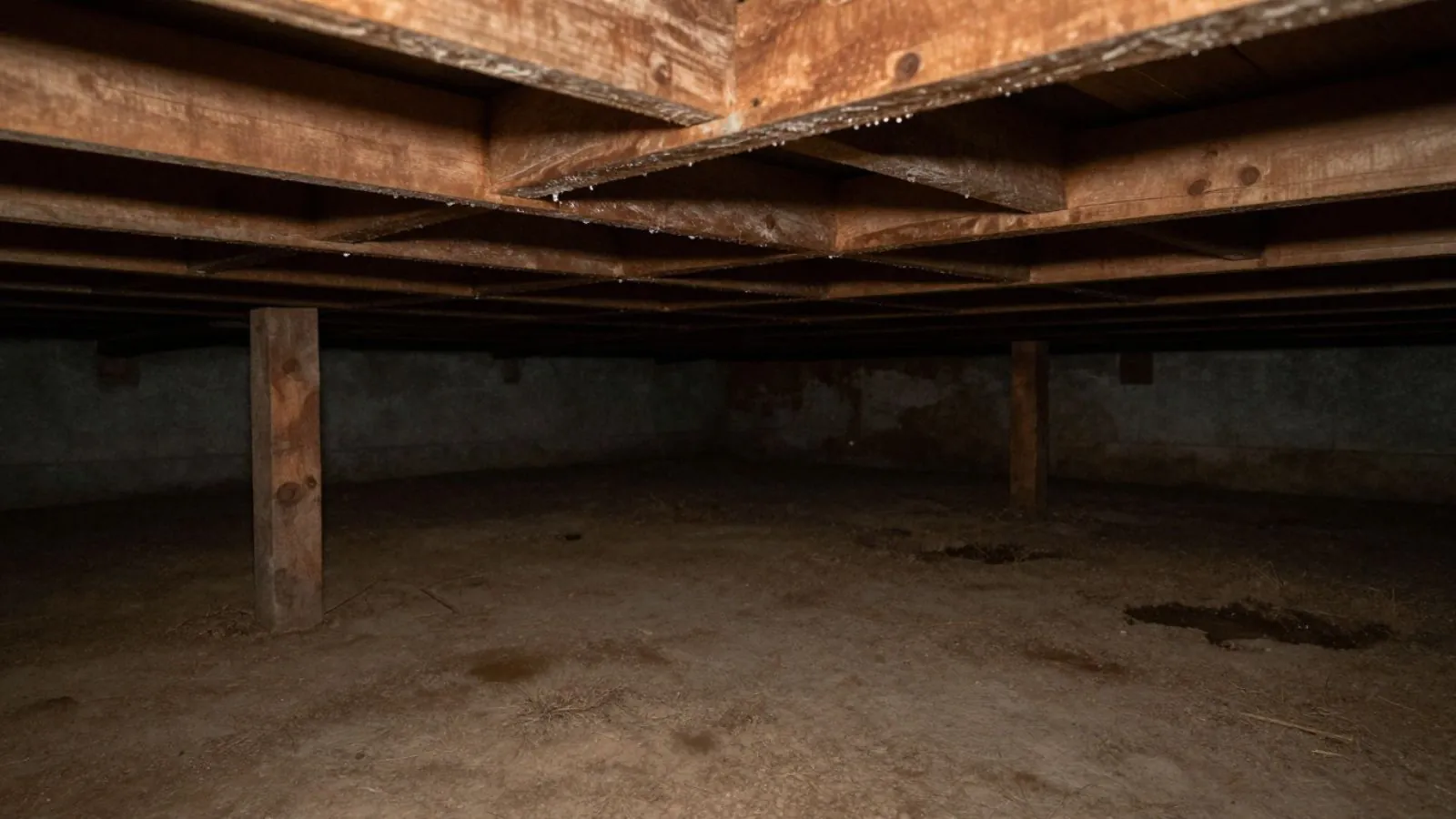
A crawl space is a shallow, usually unfinished area under the first floor. Water gets in from heavy rain, high groundwater, a leaking pipe or poor drainage around the house. Because few people go down there, damage can run for months before a floor feels soft or a smell shows up.
If you can see standing water, treat the space as unsafe until you know where the wiring runs. Do not enter if water is near outlets, junction boxes or a furnace.
What crawl space water damage looks like
Standing water or damp soil
Water has entered and is not draining. Rain, groundwater or a pipe may be the source.
Sagging or dark insulation
Fiberglass holds water and pulls away from the joists when wet.
Musty smell in the house
Moisture under the floor can rise into the living space.
Soft or cupped floors above
Joists and subfloor have absorbed moisture.
Why this area has crawl-space water risks
The Suffolk County hazard mitigation plan notes high groundwater as a recurring problem in the Town of Babylon, and says basement flooding is common after heavy rain and in low-lying areas. Crawl spaces are shallower than basements, so the same groundwater and drainage conditions can put water under a house.
A homeowner cannot read the water table from the surface. Look at where gutters discharge, where the ground slopes and whether water collects near the foundation after rain, and check the FEMA flood map for your address.
| Condition | Typical response | Notes |
|---|---|---|
| Standing water | Pump out with a submersible pump | Source of water must be identified |
| Wet fiberglass insulation | Remove and discard | Wet insulation does not dry well in place |
| Damp joists and subfloor | Dry with air movers and dehumidifiers | Moisture readings guide the end point |
| Plastic vapor barrier disturbed | Reset or replace | Helps limit ground moisture in the future |
Water under the house after rain?
Call and describe what you see. Dispatch can arrange a visit.
How drying is done in a tight space
Crews work in protective gear and bring equipment sized to the space. Water is pumped out, insulation is removed, and dehumidifiers and air movers run until joist and subfloor readings are normal. See water extraction for the pumping stage and structural drying for the rest.
If water came from a leaking pipe in the crawl space, a plumber repairs it. See burst pipe water damage for what that sequence looks like.
What affects the cost
Scope and price are explained before work starts.
Flood and groundwater damage is generally excluded from standard homeowners coverage, per the New York Department of Financial Services. A leaking pipe is treated differently. Check your policy and ask your insurer before repairs.
Common questions
What not to do in a wet crawl space
- Do not run extension cords through standing water.
- Do not seal the space or lay plastic over wet soil without removing the water first.
- Do not blow fans across wet insulation, which spreads moisture and dust.
- Do not ignore a musty smell that follows every rain.
A crawl space that stays wet is telling you something about drainage, grading or a plumbing leak. Drying treats the symptom, and fixing the cause keeps the next rain from repeating it.
A contractor can advise on gutters, downspout extensions, grading and sump options. Ask the Town building department whether permits apply before any structural or drainage work.
After the water is out
Once the space is dry, the crew can photograph the joists, check the vapor barrier and note any pipe or duct that was affected. That record helps with insurance and with deciding whether any repairs are needed. It also gives you a baseline if the space gets wet again.
If the soil stays damp, a drainage fix is the next job. A grading or gutter change, a sump system or a vapor barrier upgrade can all play a role, and the right choice depends on what is causing the water.
Crawl spaces in this area vary, since some houses have full basements, some have slabs and some have both a crawl space and a slab section. Ask a contractor which type your house has before planning any drainage work. The answer changes which fixes make sense.
If you smell sewage or see raw wastewater, treat it as a sewage backup and keep out until a crew is in protective gear. Sewage water needs different gear, disposal and sanitizing.
Not if water is near wiring or if you smell sewage or gas. Wear protective gear and call a professional if you are unsure.
Not if there is standing water or a continuing source. Water must be removed and the source addressed.
Mold needs moisture and time. A musty smell or visible growth means the area should be assessed, see mold remediation.
Yes. The FEMA Flood Map Service Center shows the zone for your address.
Standing water near wiring or a leak that is still running is. A damp patch with no active source can be scheduled.