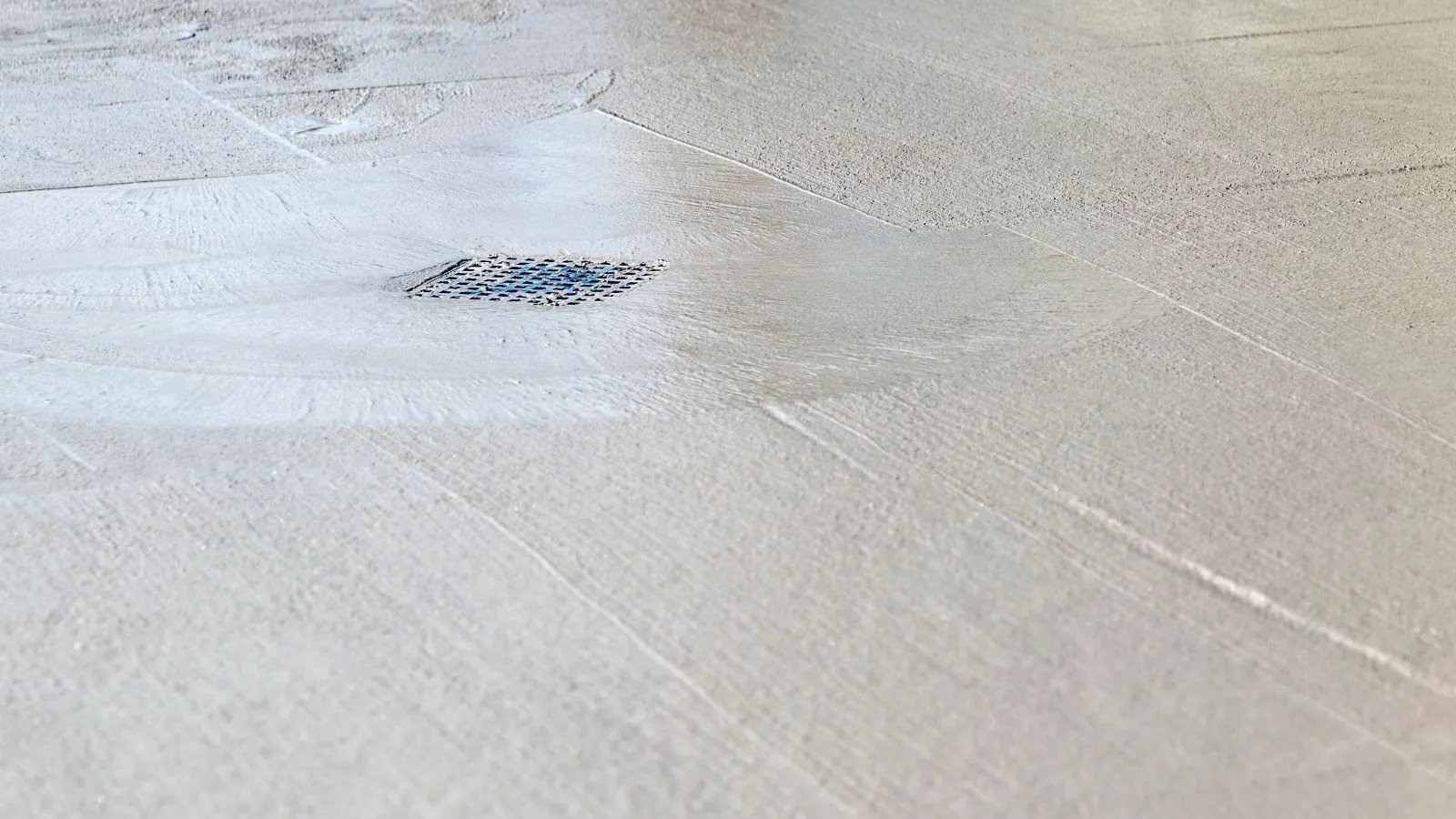
A slab leak is a leak in a water line that runs beneath or inside a concrete slab foundation. Unlike a burst pipe in a wall, nothing drips from a ceiling. The water goes into the slab, the soil and the flooring above, so the first signs are often a warm patch on the floor, the sound of running water when everything is off or an unexplained jump in the water bill.
If water is coming up through a floor or pooling on the slab, close the main shutoff and call the 24/7 line. If you only suspect a leak, turn everything off and check whether the water meter still moves.
Signs that point to a slab leak
- A warm or hot spot on the floor when no heating is nearby.
- Running water sounds with all fixtures off.
- Damp carpet, buckled laminate or hardwood without a visible source.
- Cracks that appear along baseboards or walls over time.
- A water bill that rises with no change in use.
Why symptoms and source are separate problems
Many pages on slab leaks talk only about plumbing repair, but a homeowner usually arrives with a symptom: a wet floor, a smell or a bill. The symptom is the damage, and the source is under concrete. Both need to be addressed in the right order.
First the leak is found and stopped, so the floor stops getting wetter. Then the wet flooring, baseboard and wall base are dried or removed. If drying starts before the leak is stopped, it is wasted.
| Symptom | What it could mean | First step |
|---|---|---|
| Warm floor patch | Hot water line leaking beneath slab | Close the main and call a leak-detection plumber |
| Damp carpet with no source | Cold line leaking under the room | Check the meter and call for moisture readings |
| Sound of running water, all fixtures off | Pressurized leak somewhere in the system | Close the main and listen at the slab |
| Cracks plus damp flooring | Longer-running leak | Moisture mapping and plumber assessment |
Floor damp and no obvious source?
Call. Dispatch can describe what to check and arrange moisture readings.
What drying and repair look like
Once the leak is stopped, crews extract any standing water, lift flooring that cannot dry, and place drying equipment. Hardwood and laminate often need removal, while tile can usually stay if the subfloor moisture is controlled. The process is explained in structural drying and, for floors, hardwood floor water damage repair.
In the Town of Babylon, repairs to plumbing and building work may need a permit, so ask the plumber and contractor. The Building Department can be reached at (631) 957-3058.
Cost factors
Scope and price are explained before work starts.
Insurers differ on slab leaks. Some policies cover the resulting water damage but not the cost of repairing the pipe itself, and long-running leaks may be treated differently from sudden ones. Ask your insurer before work begins.
Common questions
Checking your water meter
A simple test is to turn off every fixture and appliance that uses water, then watch the meter. If the dial or low-flow indicator keeps moving, water is going somewhere. If you also hear running water or feel a warm patch on the floor, close the main shutoff and call a plumber.
Write down the meter reading, the time and what you observed. That record helps the plumber and your insurer.
Which floors survive
Tile and sealed concrete usually survive a slab leak, though the grout and subfloor edges need to be checked. Carpet and pad are often removed, and engineered or solid wood and laminate tend to cup or buckle. A moisture meter, not appearance, decides what can stay.
If the flooring is glued to the slab, removal can be slow and messy, which is part of why scope is explained before work starts. Ask the crew what removal involves before you agree to it.
Yes. If water is surfacing or floors are flooding, call at any hour. Same-day response is offered when a crew is free, and no arrival time is promised.
Locating the pipe leak is a plumbing task. The restoration crew can read moisture and help narrow where water is traveling.
Not always. A plumber can sometimes reroute the line through walls or ceilings instead of breaking concrete.
Ask your insurer. Policies vary on resulting damage versus the pipe itself, and on long-term leaks.
If the meter is moving, close the main and call a plumber promptly. Wet flooring that is not drying also warrants a visit.