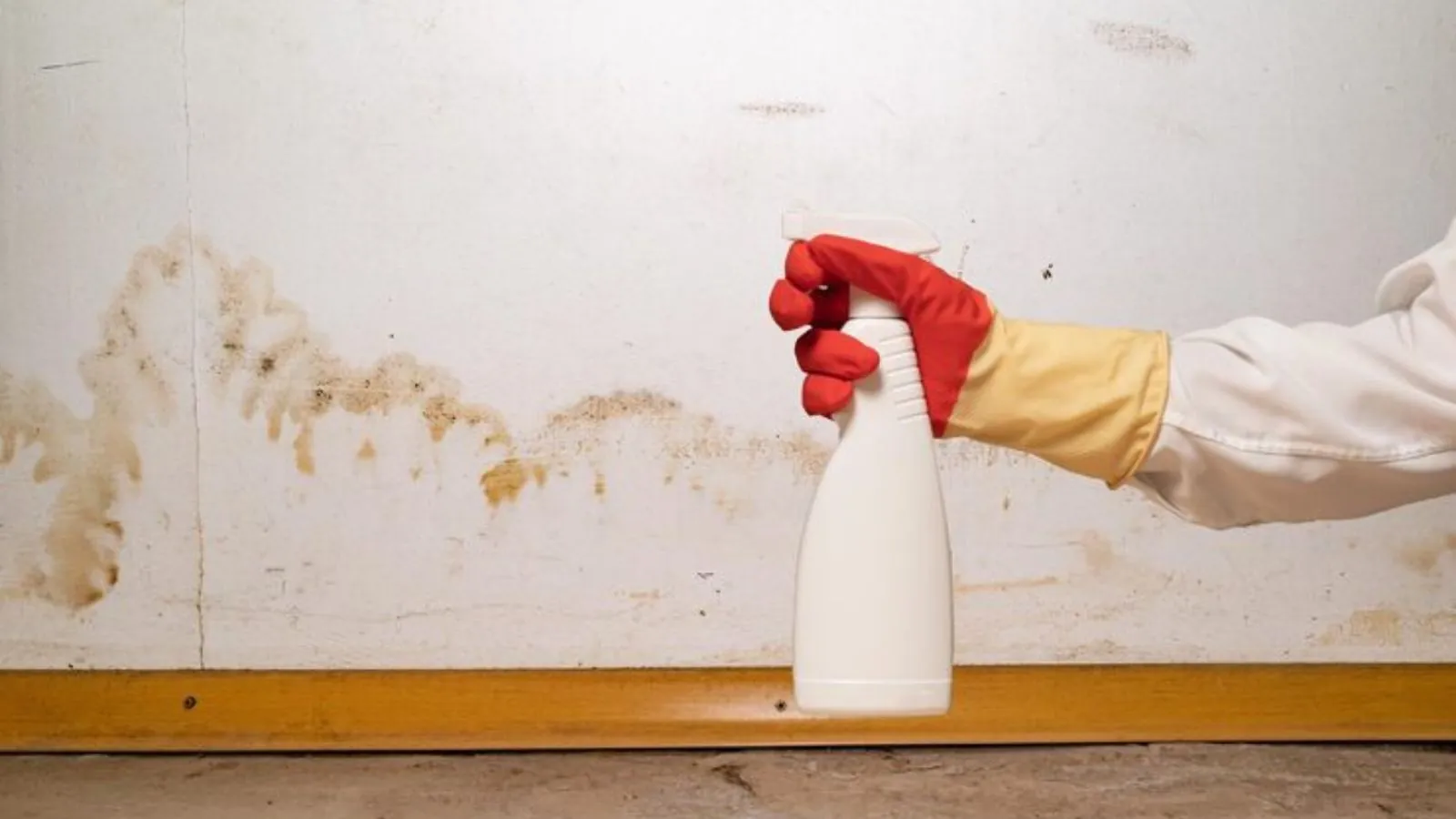
Mold is a fungus that grows where there is moisture, organic material and time. After a leak or flood, materials that stayed wet are the usual places to find it. The first step is always to stop the water and dry the area, because removing mold without fixing moisture just invites it back.
This page does not make health claims or diagnose anything. Questions about symptoms or exposure belong to a physician, and questions about what to do with your building belong to a licensed assessor.
Symptoms that point to hidden moisture
Musty smell
Often the first sign of damp materials, even if nothing is visible.
Visible spots or staining
Dark or fuzzy patches on drywall, ceilings, wood or grout.
Peeling paint or wallpaper
Moisture is moving through the wall.
Past water loss that was never fully dried
Wet materials that stayed damp are the likeliest hiding places.
How mold work is structured in New York
The New York State Department of Labor licenses mold work. A license is required to act as a mold assessor or a mold remediator, and the same company cannot act as both on the same project. The assessor writes a protocol that defines the scope, the remediator carries it out and a post-remediation assessment confirms the result.
You can verify a license on the Department of Labor's Licensed Mold Contractors Search Tool. Ask any company for its license before work begins.
| Role | What they do | Why separate |
|---|---|---|
| Licensed mold assessor | Inspects, writes the remediation protocol, tests and does clearance | Independent view of the work |
| Licensed mold remediator | Carries out containment, removal and cleaning | Performs the protocol |
| Water damage crew | Extracts water and dries materials | Fixes the moisture that mold needs |
| Homeowner | Hires, reviews documents, keeps records | Keeps control of the project |
Seeing mold after a leak?
Call. Dispatch can explain the next step and how drying and assessment fit together.
Standards and process
Industry guidance for mold remediation is published in ANSI/IICRC S520, and you can ask any company whether its crews work to it. A typical project involves containment to separate the work area, removal of materials that cannot be cleaned, HEPA vacuuming and cleaning of surfaces, and a post-remediation assessment. No one can promise that mold will never return, because that depends on moisture control.
Drying and moisture control are covered by structural drying. If the source was a leak, see burst pipe water damage or wall and drywall repair.
What changes the cost
Scope and price are explained before work starts.
Insurance coverage for mold varies widely. Many policies cover mold that results from a covered water loss and limit or exclude it otherwise. Ask your insurer, keep records of the water loss and ask whether your policy has a mold sublimit.
Common questions
Moisture sources worth checking first
Most mold problems trace back to a moisture source that was never fixed. Common sources are plumbing leaks, roof and window leaks, condensation, groundwater in basements and crawl spaces and water that was extracted but never fully dried. Fixing the source is the single most important step.
A water damage crew can find the source with a moisture meter and thermal camera. The licensed mold professionals then handle assessment and removal.
In New York, mold assessment and remediation require a license from the Department of Labor, with some exceptions for small areas and owner work. Check the Department's site for the rules that apply to you.
Questions about cleaning products and exposure belong to a physician or a licensed assessor. Do not disturb mold, which can spread it.
An independent assessor decides what testing is useful. Testing without a plan often creates more questions than answers.
Drying removes the moisture mold needs, but existing growth on materials is a separate matter for a licensed professional.
Not usually, but an active leak is. Fix the water first and then arrange assessment.
Yes. See Deer Park and Brightwaters.