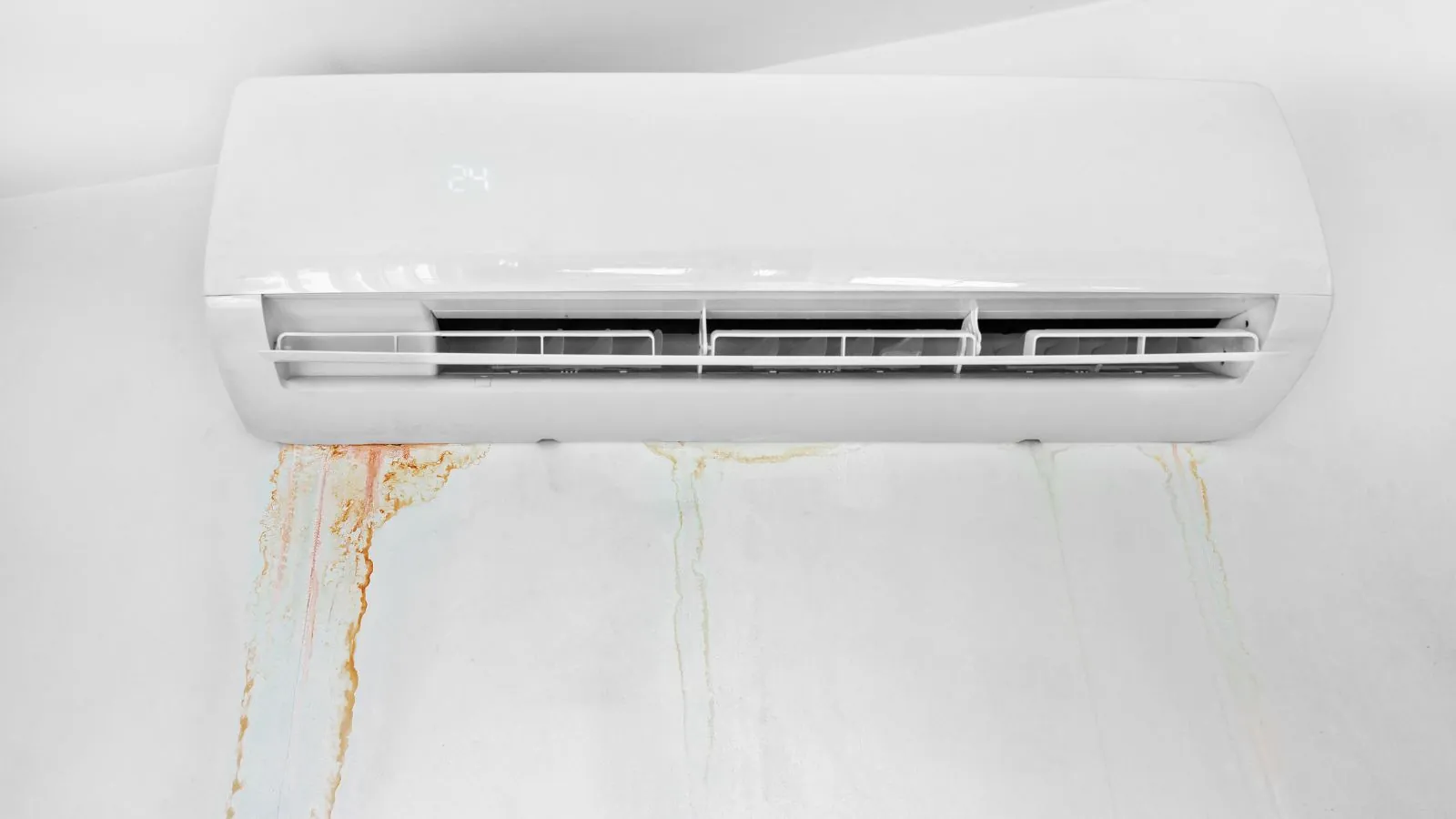
An air conditioner removes humidity from the air and sends it down a condensate drain. When the drain line clogs with algae and debris, the drain pan overflows and water goes where the air handler sits. In many houses that is an attic, a closet or a utility room above living space.
If you see water at or under the unit, turn the system off at the thermostat and at the breaker. Running it while the pan is full only adds more water to the leak.
How AC leaks typically show up
- A brown ring or drip on a ceiling below an attic air handler.
- Water in a closet or utility room around the base of the unit.
- A float switch that keeps shutting the system off.
- A damp or musty smell from vents.
These leaks are slow and routine, which is why they are often found late. A ceiling stain that grows in warm months, then fades in cool ones, is a classic sign. Insulation above the ceiling holds the water, so the drywall may show only a faint ring while the cavity above is wet.
An HVAC technician clears the drain and repairs the unit. The restoration crew handles drying and repair of what the water reached. Both jobs matter, because drying without a drain fix means the stain returns by next summer.
| What you see | Probably AC | Probably something else |
|---|---|---|
| Water at the base of the air handler | Clogged drain or full pan | Not a plumbing line if the unit is the only wet spot |
| Stain below an attic unit | Drain pan overflow | Roof leak if staining grows after rain, see ceiling water damage |
| Sweating ducts | Condensation on cold ductwork | Poor insulation, a different fix |
| Ice on the refrigerant line | Airflow or refrigerant problem | Call an HVAC technician, not a drying crew |
What the drying and repair involve
- Turn off the system and confirm the drain is cleared by an HVAC technician.
- Extract any standing water in the pan area or closet.
- Check the ceiling below and open any bowed or stained section.
- Remove wet insulation that cannot dry and run air movers and dehumidifiers.
- Patch and paint after readings are in a normal range.
AC leaking into the ceiling?
Turn the unit off and call. Dispatch can arrange a visit.
What changes the price
Scope and price are explained before work starts.
Because this leak often develops slowly, insurers may question whether it was sudden. Photograph the stain with dates, keep HVAC service records and ask your insurer what your policy says about repeated or continuous leakage.
Common questions
Attic air handlers and why they matter
When an air handler sits in an attic, a full drain pan overflows onto the ceiling drywall below. The water soaks insulation first, then the drywall, and the stain appears only after both are saturated. By then a section of ceiling may be heavier than it looks.
If the ceiling feels soft or bowed, keep out from under it and call. The wet insulation above it needs to be removed before the ceiling is closed back up.
Preventing the next one
A technician can install a float switch, which shuts the system off when the pan fills, and can flush the drain line during seasonal service. Neither is a guarantee, but both make a small clog a nuisance instead of a flood.
Ask whoever services your system to check the drain line and pan each cooling season, and to show you where the cleanout is. Keep the service record, because it also helps if an insurer asks about maintenance.
What the visit looks like
The crew starts with a moisture meter on the ceiling and a thermal camera to see where the cool, wet area ends. They photograph the stain, check the room above or the attic access if one exists and tell you what they find before any cutting begins. If the ceiling is bowed, they release the water in a controlled way and catch it.
After that, wet insulation comes out, air movers and dehumidifiers go in and readings are taken each visit until the cavity is dry. The ceiling is patched only after the numbers say it is safe to close.
It starts clean but picks up algae and dust from the pan and line. It is treated with more care than supply water once it has sat in insulation.
Some homeowners flush the line with a wet vac, but an HVAC technician can check the pan, float switch and slope. Turn the system off first.
Not if the source is repaired and the area is dried. Painting over it before then traps moisture.
If water is dripping into a room, spreading across a floor or sagging a ceiling, call right away. A stain on a dry ceiling can usually wait for a scheduled visit.
Yes. The same crews cover Brightwaters and Babylon.
It can if the area stays damp. See mold remediation for what to do if you see or smell growth.