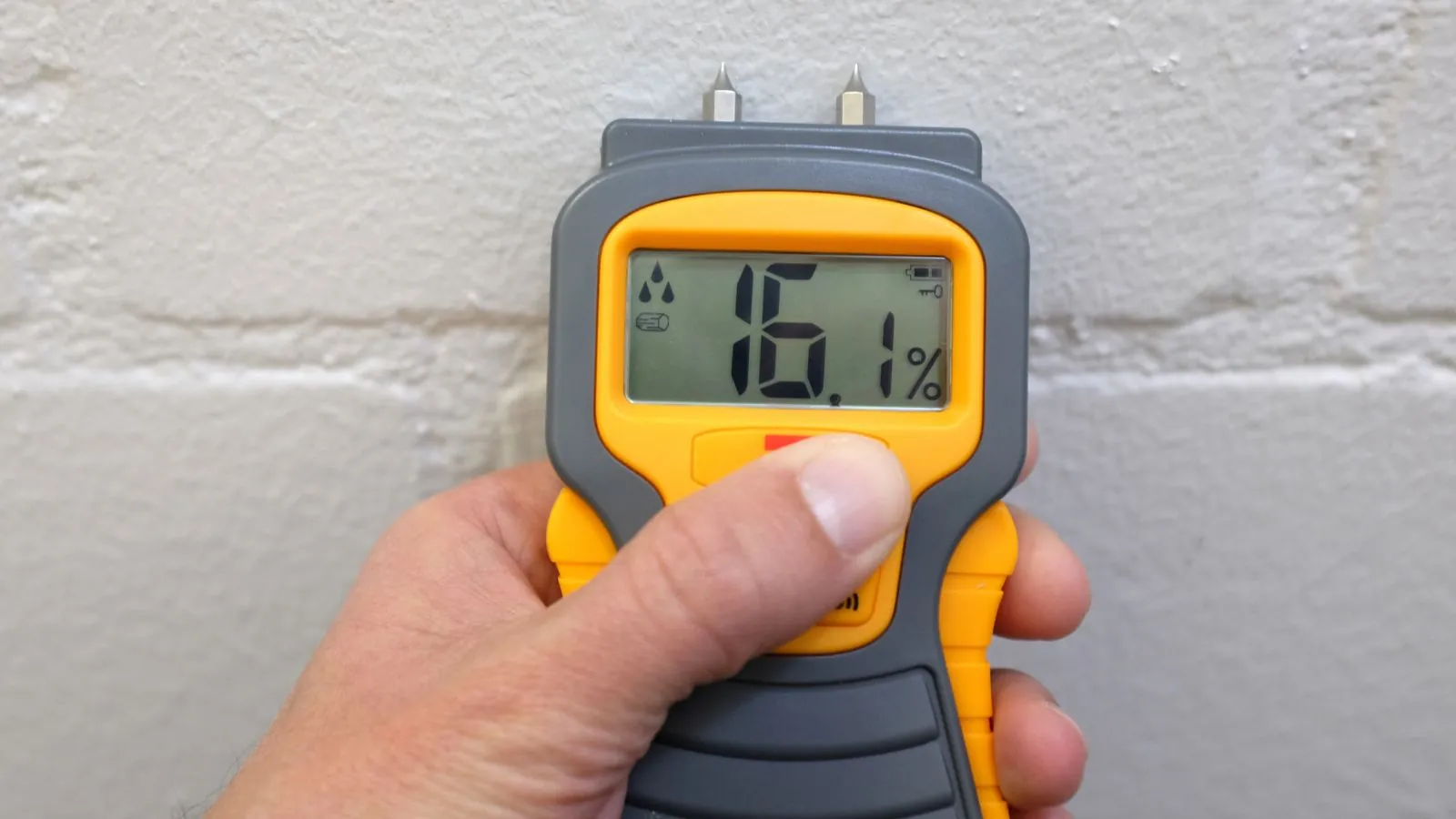
A moisture meter measures how much moisture is in a material, and the number only means something when you compare it with a dry reading of the same material. Drywall, wood and concrete each read differently. A reading on a wet wall is useful only next to a reading from a wall in the same house that never got wet.
That comparison is the core of how professionals decide when drying is finished. This guide explains the common meter types, how to take readings and what the numbers can and cannot tell you.
Two kinds of meters
| Type | How it works | Best for |
|---|---|---|
| Pin meter | Two probes measure electrical resistance between them | Wood and drywall at a specific depth |
| Pinless meter | Sends a signal into the material without piercing it | Scanning large areas and finding wet zones |
| Thermal camera | Shows surface temperature differences | Locating wet areas to check, not measuring moisture itself |
Pinless meters scan quickly, which makes them good for finding where to look. Pin meters are better for confirming a specific spot. Thermal cameras show cool areas, which can be wet, but a cool spot is not proof of moisture.
Professionals usually combine the three. They scan with a pinless meter, check with pins and use the camera to see patterns.
How readings are taken
- Take a reference reading on a dry area of the same material.
- Scan the wet area and mark where readings rise.
- Check at several heights, since water wicks upward.
- Record the readings and the date, then repeat each day.
- Compare against the dry reference until they match.
The purpose of a daily log is to show drying progress. If the readings stop dropping, equipment or airflow may need adjusting.
The industry standard ANSI/IICRC S500 covers drying goals, and a crew can explain how it applies to your job. Ask for the target readings at the start.
What the numbers mean for common materials
Each material has its own scale and its own dry range, so a number on a drywall scale cannot be compared with a number on a wood scale. A meter set to the wrong material gives misleading numbers. That is why the reference reading matters more than any chart.
Concrete is the slowest to dry. A basement slab can hold moisture for weeks, and some meters can only read the surface.
Local note: groundwater and slabs
The Suffolk County hazard mitigation plan notes that high groundwater is a recurring problem in the Town of Babylon. In houses with basement slabs, that moisture can keep readings elevated even after a leak is fixed. A reading that stays high near the slab edge may point to groundwater and not to the original leak.
Water spreading right now?
Guides are for planning. If water is moving, call the 24/7 line first.
Can a homeowner use a meter?
Yes, to a point. A basic meter can help you find damp spots and confirm that a repaired leak has dried. It cannot tell you what is behind a wall unless you also check several places and compare.
For anything beyond a small leak, ask a crew to map moisture. See water extraction for the first stage and wall and drywall repair for what happens when a wall does not dry.
Signs that readings may be misleading
- Metal pipes, studs or foil-faced insulation can distort readings.
- Dust, salt or paint can affect surface meters.
- Readings taken once, not trended over days, say little.
- A meter set to the wrong material scale gives numbers that look precise but are not.
When in doubt, ask the person taking readings to show you the reference reading and the material setting. A good technician will explain it.
If you are in Babylon or Deer Park and want readings after a leak, the crew can walk you through what they are measuring. Bring your questions to the visit.
Common questions
A homeowner checklist after a leak
- Find a dry reference reading on a wall or floor that never got wet.
- Scan the wet area and mark the edges with a pencil or tape.
- Check again the next day and compare.
- Look at baseboards, door frames and the bottom of walls, where water collects.
- Note any smell, stain or soft spot, which can show up before a meter does.
This will not replace a professional drying plan. It does give you a way to tell whether the wet area is shrinking or growing.
If the area is growing, or the readings are not dropping after a day or two, call a crew to place equipment and map the moisture properly. Waiting a week rarely helps.
Why the end point matters
Closing up a wall before it is dry is how a leak becomes a mold call a few weeks later. The final reading should match the dry reference, or fall within the range the crew has set for that material. Ask to see it.
Keep the final moisture log with your claim records. It shows that the work was completed and what the numbers were.
It depends on the material and the meter. Compare against a dry reference in the same house.
Several days is common, but readings, not time, decide. Dense materials take longer.
Yes, but results depend on technique. A meter helps you find damp spots, not certify that a building is dry.
No. It means moisture is present. Mold needs moisture and time, and an assessor decides what to do about it.
To take readings and adjust equipment until the numbers match the dry reference.
Yes. Ask for the moisture log and keep it with your claim records.