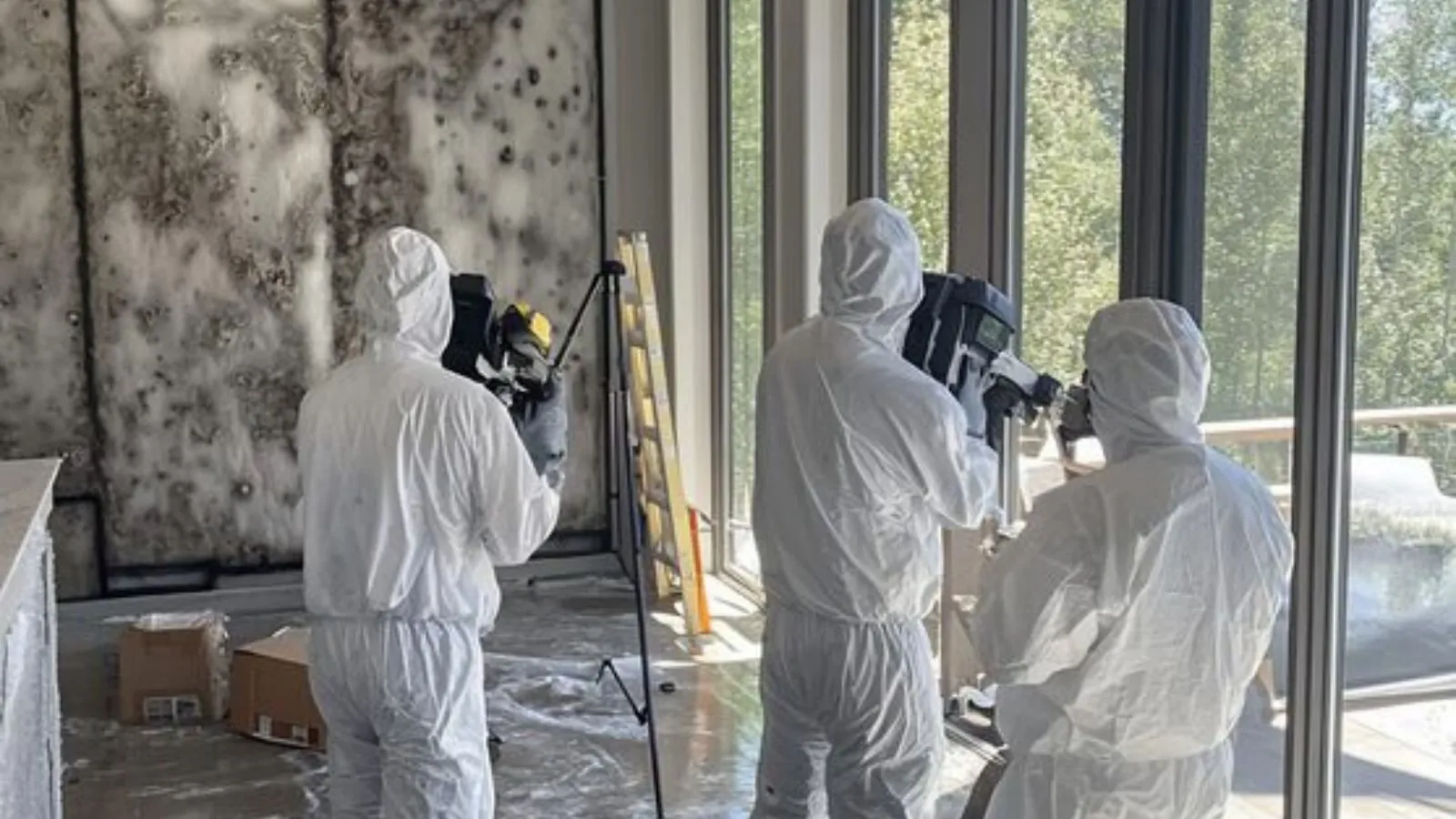
Clearance testing is the final step of a mold project. In New York, a licensed mold assessor checks the work area after remediation and confirms whether it meets the goals set in the protocol. Sellers and buyers sometimes ask for it because it provides a document that shows what was done.
This guide explains how the process is structured in New York, according to the Department of Labor, and what to ask. It does not promise any result, and it makes no health claims.
How a New York mold project is structured
| Role or document | What it does | Notes |
|---|---|---|
| Licensed assessor | Inspects and writes the protocol | Independent from the remediator |
| Protocol | Defines scope, containment and goals | Set before work starts |
| Licensed remediator | Performs the work | Cannot be the same business as the assessor |
| Post-remediation assessment | Checks the result and issues a report | Required at the end of the project |
The Department of Labor says an independent assessment defines the scope, the assessor and remediator cannot be the same on a project and a post-remediation assessment is required. Clearance is the common name for that final step.
Ask for the protocol and the final report for your records. Together they show what was done and how it was verified.
What clearance typically involves
- A visual inspection of the work area to confirm materials were removed or cleaned.
- Checks that the cause of moisture has been addressed.
- Sampling in some cases, as chosen by the assessor.
- A written report that states whether the area met the protocol goals.
The assessor decides what testing is appropriate, not the seller or buyer. Ask the assessor to explain what will be done and why.
Clearance is not a warranty. It is a record of conditions on the day of the assessment.
When a sale is involved
Buyers often ask for documentation if mold was found during an inspection. A protocol, remediation invoice and clearance report together show the history. Ask your agent or attorney what disclosure rules apply to your sale.
Do not skip the moisture fix. A report that says an area is clear does not help if a leak is still running above it.
Local note: lower levels and groundwater
The Suffolk County hazard mitigation plan notes high groundwater and common basement flooding in the Town of Babylon. If a house being sold has a finished basement with a history of water, a buyer may reasonably ask about drainage as well as mold. Records of drying, repairs and a clearance report all answer that question.
How to prepare
- Gather any past water damage invoices and drying logs.
- Make sure the moisture source is fixed and the area is dry.
- Hire a licensed assessor first, and let the assessor recommend scope.
- Hire a separate licensed remediator to carry it out.
- Schedule the post-remediation assessment and keep the report.
Water spreading right now?
Guides are for planning. If water is moving, call the 24/7 line first.
Verify licenses on the Department of Labor's Licensed Mold Contractors Search Tool. Ask for copies of the protocol and report. If water drying is needed before mold work, see structural drying and mold remediation.
Questions to ask an assessor
- What is your New York license number, and how can I verify it?
- What will the protocol cover, and what is excluded?
- What testing, if any, will you do, and why?
- When will I get the report?
- How do you stay independent from the remediator?
Be wary of anyone who offers to do all roles on one project. The independence is the point of the structure. For homes in Babylon or Deer Park, the process is the same, and permits are handled by the Town or village.
Common questions
Timing the work around a closing
Mold projects follow a sequence: assessment, protocol, remediation and post-remediation assessment. Each step takes time, and the moisture fix may take longer than the mold work. Start early if a closing date is set.
Tell your agent and attorney what is happening, and keep the buyer informed through them. Surprises close deals less often than silence does.
What the report should include
- The date and the assessor's name and license.
- A description of the area assessed and what was observed.
- Any sampling done and the method used.
- A statement of whether the protocol goals were met.
- Photographs of the area.
Ask the assessor to explain the report in plain terms. Keep a copy with your deed papers.
If conditions change later, such as a new leak, the report does not apply. It is a snapshot.
- Turn off power to wet areas only if you can reach the panel from dry ground.
- Do not touch wet electrical equipment, and call 911 or the utility for any electrical or gas risk.
- Keep children and pets out of the area, and photograph the damage before you clean.
Ask your agent or attorney. Clearance is required at the end of a New York mold project, but sales rules differ.
No. In New York, the assessor and remediator cannot be the same on a project.
No. It documents conditions at one time. Moisture control matters afterward.
It depends on the project. The assessor can give a schedule.
The remediator addresses the findings, and the assessor re-checks.
Typically the property owner. Ask for prices in writing.