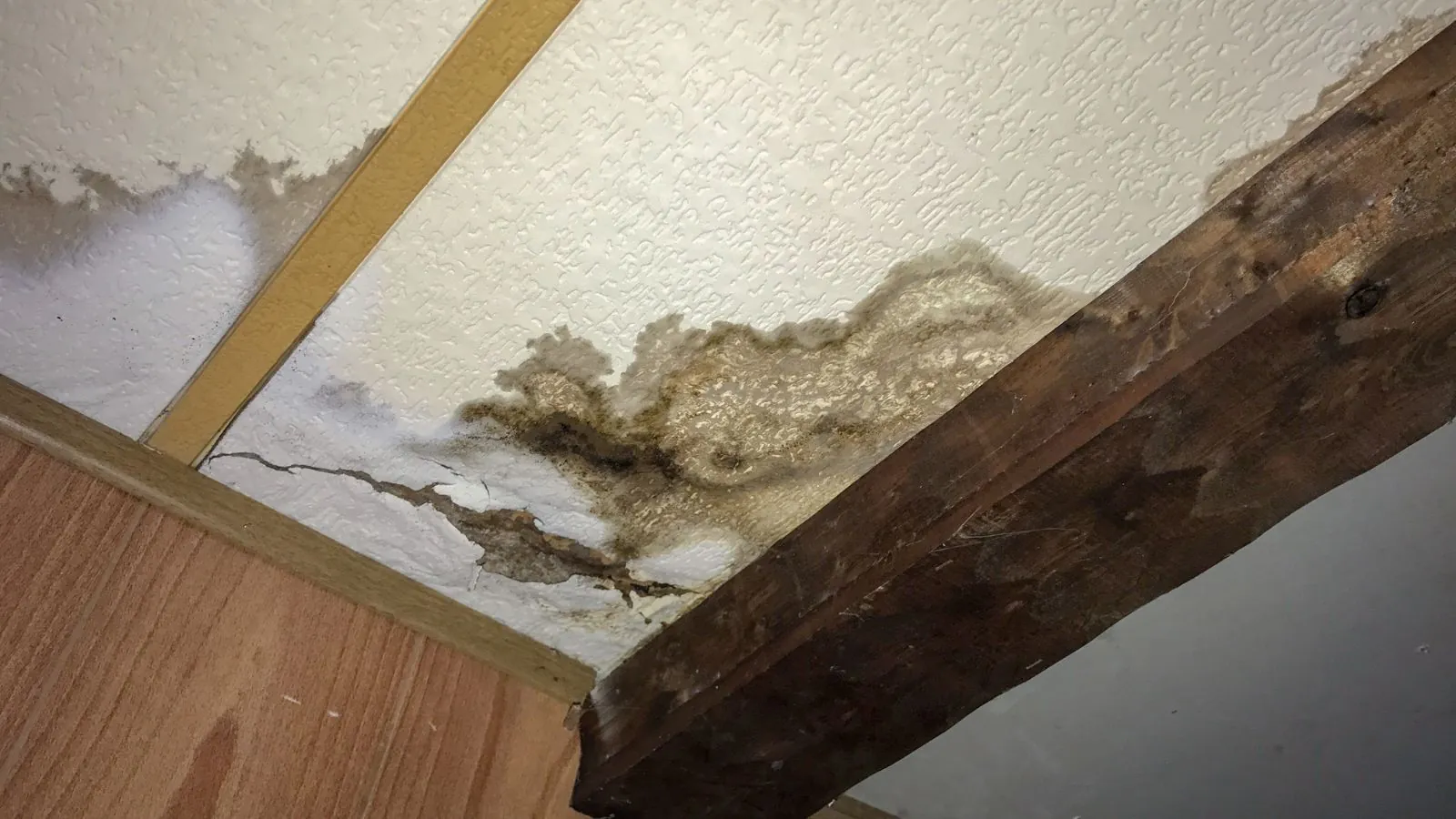
Telling old water damage from new matters because it changes what you do. Fresh damage is usually wet and needs drying now. Old damage may be dry but still need repair, and it may affect an insurance claim. Several visible clues help, but none is conclusive on its own.
This guide lists the common signs and how a professional checks them. It does not tell you whether an insurer will treat the loss as sudden or gradual.

Clues that suggest recent water
- The material is still damp to the touch or reads high on a moisture meter.
- Stains are light yellow or tan and have soft, blurry edges.
- Paint is just starting to bubble.
- Drywall is soft but not crumbling.
- There is a fresh smell of dampness and no heavy mustiness yet.
Clues that suggest older damage
- Stains have dark brown rings, sometimes several layered rings.
- The material is dry but stained, cracked or warped.
- Paint is peeling or flaking in sheets.
- Wood is darkened, split or crumbling.
- Mineral deposits or rust are present.
| Sign | More likely new | More likely old |
|---|---|---|
| Moisture reading | High compared with dry reference | Normal or near normal |
| Stain color | Pale, soft edges | Dark, defined rings |
| Material | Soft and swollen | Brittle, cracked or stained |
| Smell | Damp | Stale or musty |
Rings can be misleading. A stain with multiple rings suggests repeated wetting, but a single event can leave one ring or several depending on how the water dried.
A moisture meter helps because new water shows up as a high reading. A dry stain tells you the water is gone, not when it came.
Why the difference matters for repairs and claims
Insurers often distinguish sudden loss from long-term seepage. A new leak found quickly is treated differently from a stain that has been there for years. If you are buying or selling, old damage may also matter for disclosure.
Take dated photos when you find damage, and ask a plumber or roofer to identify the source. For claim steps, a restoration crew can provide readings and a written scope.
Local note: stains in older ceilings
Many houses in North Babylon date to the postwar building boom, including the Parkdale Estates area, which was built on the former Guggenheim estate land. Ceilings and walls in older houses may carry old stains from past roof or pipe leaks. A past stain that is dry is a different job from an active leak, and it is worth finding out which one you have.
How a pro checks
- Take moisture readings against a dry reference.
- Use a thermal camera to see patterns.
- Inspect the source: plumbing, roof, windows or HVAC.
- Check for rot, rust or mineral deposits.
- Photograph the area and record readings.
Water spreading right now?
Guides are for planning. If water is moving, call the 24/7 line first.
The goal is to decide whether the water is still present, where it is coming from and what has to be repaired. See ceiling water damage repair and wall and drywall repair for the next steps. If drying is needed, structural drying explains how it is done.
What to do if you find old damage
- Find out if the source is fixed. A dry stain with an active leak above will get wet again.
- Photograph it with a date, and write down when you first saw it.
- Have a plumber or roofer check the source.
- Repair and repaint only after the area is confirmed dry.
- Keep records for insurance or sale.
Painting over an old stain without fixing the source is a short-term cosmetic fix. The stain returns if the area gets wet again. For homes in Brightwaters or Deer Park, the same approach applies.
Common questions
Buying or selling a house with a stain
If you are buying, a stain on a ceiling or wall is a reason to ask questions. Ask the seller what caused it, whether it was repaired and whether there are invoices. A home inspector or a moisture visit can check whether the area is dry today.
If you are selling, repairing the source and keeping the records is better than painting over the stain. Ask your agent or attorney what disclosure rules apply to your sale.
Simple tests a homeowner can try
- Press gently on the stain with a gloved finger. Soft means wet or damaged.
- Look at the edges of the stain after a rain to see if it grows.
- Use a basic moisture meter and compare with a dry spot in the same room.
- Check the attic or room above for a source.
These tests are rough. They help you decide whether to call someone, not to certify that a surface is dry. If the stain grows after rain or after using a fixture, the source is active.
Not precisely. Clues help estimate, but readings and the source matter more than the exact date.
Not always. A dry stain under an active leak will get wet again, so check the source.
It depends on the policy and the cause. Gradual damage is often excluded, so ask your insurer.
Ask your real estate agent or attorney what disclosure rules apply.
Surface stains can sometimes be primed and painted after the source is fixed and the area is dry.
Not necessarily. Mold needs ongoing moisture, and an assessor can check.