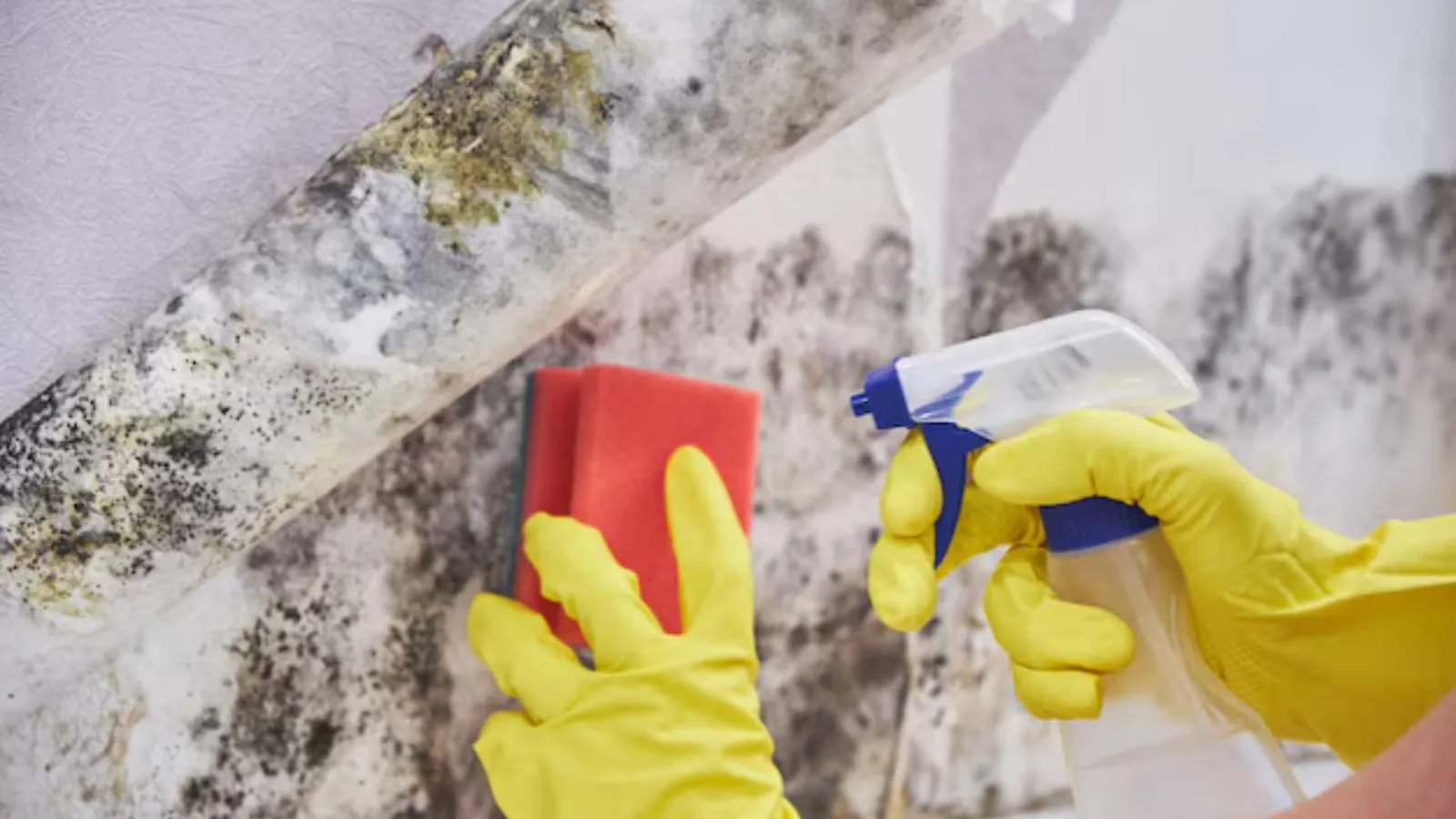
Mold in a bathroom grows where moisture lingers, such as on grout, caulk, ceilings and the wall around a shower. The lasting fix is to remove the moisture, because cleaning a spot without fixing the cause only buys time. After that, size the job: a small surface spot can be handled with ordinary cleaning, while a large or hidden problem needs a professional.
This guide does not make health claims. Questions about symptoms belong to a physician, and questions about large mold areas belong to a licensed assessor.
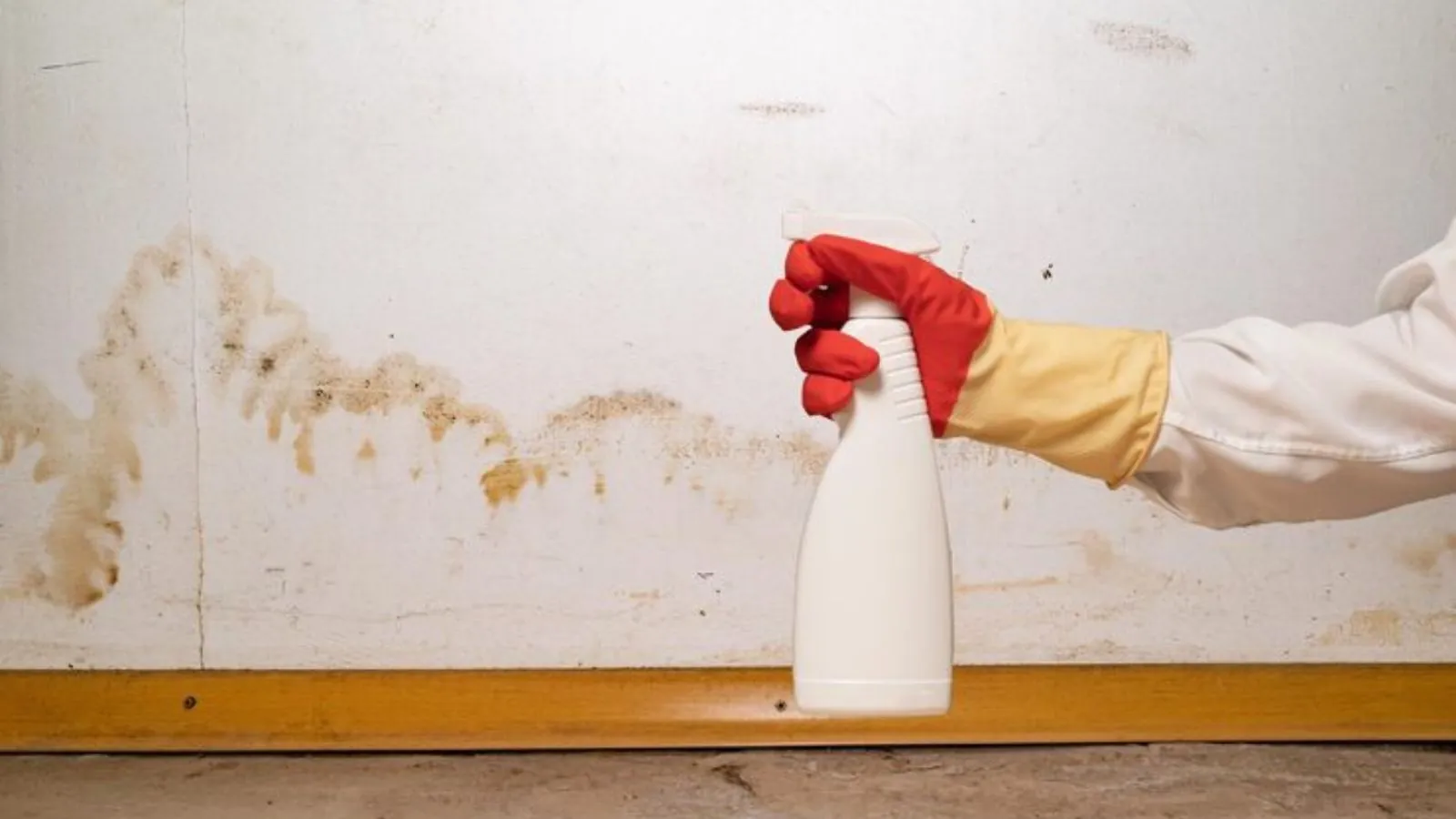
Find and stop the moisture
- Poor ventilation, such as a fan that does not vent outside or is too weak.
- A leaking shower pan, tub seal or supply line.
- Damaged caulk or grout that lets water behind tile.
- A roof or plumbing leak above the bathroom.
- Long steamy showers with the door closed and no airflow.
If you can run the fan for a while after each shower and the surfaces dry, that is a good sign. If a surface stays wet, the source is likely a leak, and a plumber should check it.
A leak behind a wall is a drying job first. See wall and drywall water damage repair and structural drying.
Small surface spots versus larger problems
| What you see | Typical approach | Who handles it |
|---|---|---|
| Small spots on grout or caulk | Clean surfaces, replace caulk, improve ventilation | Homeowner |
| Spots returning after cleaning | Look for hidden moisture | Plumber or water damage crew |
| Growth on drywall, ceiling or behind tile | Assessment and possibly removal of materials | Licensed professionals if the area is large |
| Musty smell with no visible growth | Check for hidden moisture | Moisture mapping and assessment |
New York licenses mold assessors and remediators through the Department of Labor. The Department's program sets rules for when a license is needed, so check its site for exceptions that apply to small areas and owner work.
If you hire out the work, ask for a license and verify it using the Department's Licensed Mold Contractors Search Tool. Do this before you sign anything.
Cleaning a small surface spot
- Fix the moisture source first.
- Wear gloves, eye protection and a mask rated for dust.
- Clean hard surfaces with detergent and water, and let them dry fully.
- Replace caulk that is stained or peeling.
- Throw away porous items that are heavily affected, such as a stained bath mat.
Do not mix cleaning products, since some combinations release dangerous fumes. Do not sand or scrub in a way that sends dust into the air.
If mold returns in the same spot, the moisture source is still there. That is when a plumber or a moisture mapping visit helps.
Water spreading right now?
Guides are for planning. If water is moving, call the 24/7 line first.
Local note: homes near water
Houses near Deer Lake and other low areas of North Babylon sit in an area where the Suffolk County hazard mitigation plan notes high groundwater. Bathrooms on lower levels or basements may see more humidity than upper-floor ones. A dehumidifier and a working exhaust fan make a difference in those spaces.
When to bring in help
Call if the growth is larger than a small area, if it keeps coming back or if you find soft drywall or a leak. The first step is drying, which is described in water extraction and structural drying. After that, an assessor can scope any mold work.
For a bathroom in Brightwaters or Babylon, the same process applies. Only the permit contact changes with the municipality.
Common questions
Ventilation fixes that work
A bathroom fan should vent to the outside, not into an attic, and it should move enough air for the room. Running it for a while after a shower helps surfaces dry. If the fan is old or noisy, replacing it is a modest job for an electrician.
Keep the door open after a shower if the room has no fan. Wipe down wet tile and glass when you can, which takes seconds.
Caulk, grout and sealing
Caulk that is cracked or stained lets water behind the tile. Remove it, let the area dry and apply new caulk made for bathrooms. Grout can be resealed once clean and dry.
If tiles are loose or the wall feels soft, water has been getting behind them. That is no longer a cleaning job, and a repair is needed.
When it is a bigger problem
A musty bathroom with no visible growth often has moisture behind the wall or under the floor. A moisture meter and thermal camera can find it without opening walls. If the readings are high, drying and repair come first.
Do not seal or paint a wet wall. The moisture will find a way out, usually through the paint.
Small surface spots on hard material can usually be cleaned by a homeowner. Larger areas or growth on drywall call for a professional.
No one can promise it will not. It depends on whether the moisture is controlled.
New York requires a license to act as a mold assessor or remediator, with some exceptions. Check the Department of Labor's site.
An independent assessor decides what testing is useful. Testing without a plan often creates more questions.
Not always. It means moisture is likely present, and a visit can find out where.
A licensed plumber for the leak, and a water damage crew for the drying.